Caleb Whitaker
If you have come across the word “viltnemnda” while researching Norwegian local government, hunting regulations, or wildlife management, you are looking at one of the more practical pieces of how Norway handles its wild animals at the local level. Viltnemnda is the Norwegian term for a municipal wildlife committee, a body that historically handled decisions about hunting quotas, wildlife habitat, and injured or dead animals within a specific kommune (municipality).
The short answer is that viltnemnda is the local political and administrative body responsible for the part of wildlife management that Norwegian law places in the hands of municipalities. But the fuller answer is more interesting, because not every municipality organizes this work the same way anymore, and understanding why requires a look at how Norway’s wildlife system is built from the ground up.
What Does Viltnemnda Mean?
“Viltnemnda” combines two Norwegian words: “vilt,” meaning wildlife or game, and “nemnda,” the definite form of “nemnd,” meaning committee or board. Put together, it translates roughly to “the wildlife committee” or “the wildlife board.” You will sometimes see it written without the definite article, as “viltnemnd,” when referring to the concept in general rather than one specific municipality’s committee.
In practice, viltnemnda refers to a nemnd, meaning a smaller political committee appointed by the kommunestyre (municipal council), tasked with the wildlife-related responsibilities that fall under municipal authority. It sits within a larger legal framework built around Norway’s Wildlife Act, known as viltloven, which covers all wild land mammals, birds, amphibians, and reptiles within the country’s borders.
A Short History of Viltnemnda in Norway
Viltnemnda is not a recent invention. According to the Norwegian encyclopedia Store norske leksikon, state-mandated viltnemnder existed in every Norwegian municipality from 1952 until 1992, appointed by the municipal council but operating under national oversight. This was a period when wildlife policy was still heavily centralized, even though the committees themselves worked locally.
That changed on January 1, 1993, when responsibility for local wildlife management was formally transferred to the municipalities. From that point on, kommunene gained real authority over decisions that used to require more central involvement, particularly around deer species management and local hunting regulation. This shift reflects a broader pattern in Norwegian governance, where municipalities are given considerable freedom to organize their own administrative structures as long as they meet their legal obligations.
That freedom is exactly why viltnemnda looks different depending on where you are in Norway today. Some municipalities kept a standalone viltnemnda. Others folded its responsibilities into a combined committee, sometimes called something like “vilt- og fiskeutvalget” (the wildlife and fisheries committee), that also covers fishing rights and other outdoor resource issues. A number of municipalities have gone further and dissolved the political committee altogether, handling the practical, day-to-day work through an ettersøkskorps or fallviltgruppe (a search and tracking team for injured or dead wildlife) instead.
How Norway’s Wildlife Management System Is Organized
To understand where viltnemnda fits, it helps to see the full chain of authority. Norwegian wildlife management runs through several layers of government, each with a distinct role:
- The relevant ministry sets national policy and legal frameworks.
- Miljødirektoratet, the Norwegian Environment Agency, handles national-level regulation and oversight, including matters related to large carnivores.
- Statsforvalteren, the State Administrator’s office (formerly known as Fylkesmannen), manages regional matters and acts as a link between national policy and local implementation.
- Fylkeskommunen, the county municipality, plays a role in broader regional coordination.
- Kommunen, the municipality, carries out the day-to-day management, and this is where viltnemnda, or its modern equivalent, does its work.
This layered structure means viltnemnda does not operate in isolation. It has real decision-making power within limits set by national law and delegated authority from the kommunestyre, but it does not set overarching wildlife policy or manage species like wolves and bears, which fall under a separate and more centralized system involving Miljødirektoratet and Statsforvalteren.
What Viltnemnda Actually Does
The core job of viltnemnda is to carry out the municipality’s responsibilities under viltloven and related regulations. While the exact scope varies by municipality and by the delegation given from the kommunestyre, the recurring responsibilities tend to fall into a few clear categories.
Setting Hunting Quotas for Deer and Beaver
One of the most concrete tasks tied to viltnemnda is drafting proposals for hunting quotas, particularly for hjortevilt (deer species such as moose, red deer, and roe deer) and beaver. Getting these numbers right matters for both conservation and practical land management, since overpopulation can lead to crop damage, forest regeneration problems, and higher rates of vehicle collisions.
Municipalities are required to develop management goals for their local deer populations under the regulation on hjorteviltforvaltning. These plans typically run over multi-year periods and are formally adopted by the kommunestyre, with viltnemnda or its equivalent committee doing much of the preparatory work.
Promoting Sustainable Hunting and Wildlife Care
Beyond quotas, viltnemnda has traditionally been tasked with promoting good “viltstell,” a term that covers habitat care and the broader stewardship of wildlife populations. This can include supporting local wildlife research, organizing viltstellområder (designated wildlife management areas), and generally encouraging hunting practices that keep local populations healthy over the long term.
Handling Fallvilt and Injured Wildlife
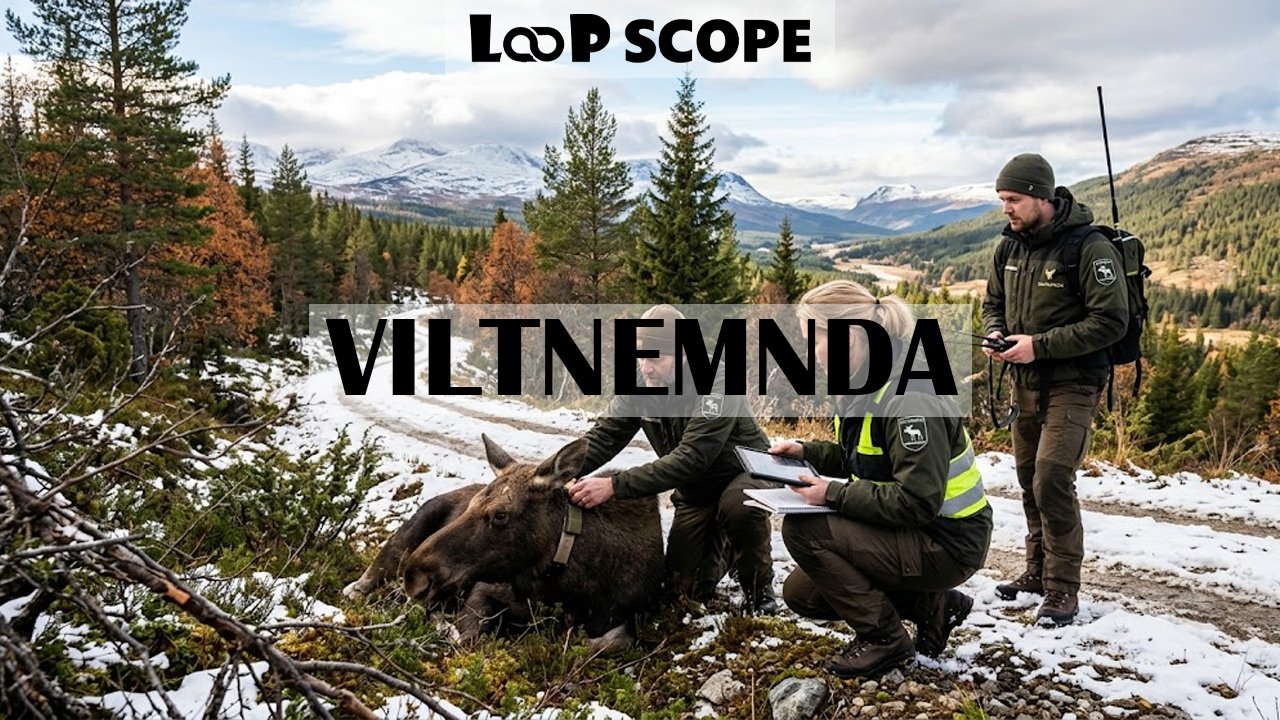
Fallvilt refers to wildlife that dies from causes other than regular hunting, most commonly from vehicle or train collisions. This is one of the most visible and time-sensitive parts of municipal wildlife work. If you hit a deer or moose while driving in Norway, you are required to report it, and the municipality’s fallviltgruppe or ettersøkskorps, a dedicated team of trained trackers, is responsible for locating and dealing with the animal.
This work happens whether or not a municipality still has a formally organized viltnemnda. Even in places where the political committee has been dissolved, as has happened in some municipalities, the fallvilt response system continues to operate because it is a legal obligation, not an optional service.
Managing the Local Wildlife Fund
Many municipalities maintain a viltfond, a wildlife fund used to finance local wildlife management activities. Money from selling usable meat from fallvilt, when it meets food safety standards and is approved by Mattilsynet (the Norwegian Food Safety Authority), can go toward this fund. Viltnemnda, where it still exists as a formal body, is often responsible for adopting the annual budget and overseeing how the fund is used, in line with the regulation governing viltfond.
Who Sits on Viltnemnda?
Viltnemnda members are political appointees, chosen by the kommunestyre, much like members of other municipal committees. They are not necessarily wildlife experts by profession, though many have practical knowledge of hunting, farming, or land management given the nature of the role. Municipal staff, such as an environmental or agricultural consultant, typically support the committee by preparing case documents, taking minutes, and serving as the point of contact for members of the public.
Because these are political appointments tied to the municipal council’s term, membership changes periodically, generally in line with local election cycles.
Does Every Municipality Still Have a Viltnemnda?
No, and this is one of the more important things to understand if you are researching the term today. Norwegian municipalities have significant freedom to decide how to organize their own committees under the Local Government Act, and many have used that freedom to restructure wildlife management over the past two decades.
Some municipalities still run a dedicated viltnemnda with regular meetings and formal case handling. Others have merged the function into a broader committee that also covers fisheries or general environmental matters. And in some places, the political committee has been discontinued entirely, with practical responsibilities such as fallvilt response handled directly by an ettersøkskorps, while quota-setting and planning duties are absorbed by another existing committee or by municipal administration.
If you are trying to find your own municipality’s current arrangement, the most reliable approach is checking your kommune’s official website, since the structure and even the name of the responsible body can differ from one municipality to the next.
Viltnemnda and Predator Management (Rovvilt)
Large carnivores, known collectively as rovvilt (predators such as wolf, bear, lynx, and wolverine), technically fall within the general field that viltnemnda works in, but they are governed by a separate and more centralized regulatory framework. Decisions about predator populations and quotas involve Miljødirektoratet and Statsforvalteren rather than the municipality alone. Viltnemnda’s role here tends to be limited, often restricted to providing local input or handling matters specifically delegated to it, rather than independent decision-making authority over predator numbers.
Why Local Wildlife Management Matters
It is worth stepping back to ask why Norway organizes wildlife management this way in the first place. The country’s terrain and wildlife populations vary enormously between regions. A municipality in the mountainous interior with a large moose population faces very different pressures than a coastal municipality with limited big game but more concern for coastal bird species or seals.
Placing much of the decision-making at the municipal level allows local knowledge to shape practical outcomes, such as how many deer can be sustainably harvested in a given area, or how to respond quickly when wildlife causes property damage. At the same time, national oversight through viltloven and agencies like Miljødirektoratet keeps this local flexibility within a consistent legal and ecological framework, so decisions in one municipality do not undermine conservation efforts more broadly.
Practical Situations Where Viltnemnda or Its Successor Gets Involved
A few everyday scenarios illustrate where this system actually touches people’s lives. A farmer dealing with recurring crop damage from deer may need a skadefellingstillatelse, a permit for damage-prevention culling, which is handled at the municipal level under naturmangfoldloven. A driver who hits a moose is required to report the incident, triggering a response from the local ettersøkskorps regardless of how the municipality’s committee structure is set up. A hunting team applying for a local quota on beaver will typically be working with whichever body currently holds that responsibility in their municipality.
In all of these cases, the underlying legal responsibilities trace back to the same municipal wildlife management duties that viltnemnda was originally created to handle, even if the name and structure of the responsible committee has since changed.
Conclusion
Viltnemnda began as a nationally mandated committee present in every Norwegian municipality, and it became a genuinely local institution after 1993, when wildlife management responsibilities were handed over to the kommuner. Its core functions, setting hunting quotas for deer and beaver, supporting sustainable wildlife stewardship, managing the local wildlife fund, and coordinating the response to fallvilt, remain essential parts of Norwegian local governance today.
What has changed is the organizational shape. Because municipalities have flexibility in how they structure their committees, viltnemnda survives as a distinct body in some places, has been merged into broader committees in others, and has been replaced by more streamlined arrangements, such as a dedicated ettersøkskorps, elsewhere. If you want to know exactly how your own municipality handles this work, checking directly with the kommune’s website or environmental office is the most reliable way to get a current answer.
Frequently Asked Questions
What is viltnemnda in Norway?
Viltnemnda is a municipal committee responsible for local wildlife management duties, including setting hunting quotas for deer species and beaver, overseeing wildlife stewardship, and managing the local wildlife fund.
Does viltnemnda still exist in every Norwegian municipality?
No. Because municipalities can organize their own committee structures, some still have a dedicated viltnemnda, others have merged it with related committees, and some have replaced it with other arrangements such as a search and tracking team.
Who appoints the members of viltnemnda?
Members are appointed by the kommunestyre, the elected municipal council, similar to how other local political committees are formed.
What is fallvilt, and who handles it?
Fallvilt refers to wildlife that dies from causes other than hunting, most often vehicle collisions. Municipal fallviltgrupper or ettersøkskorps, trained tracking teams, are responsible for responding to these incidents.
Does viltnemnda decide on wolf and bear management?
Not directly. Large carnivore management falls under a more centralized system involving Miljødirektoratet and Statsforvalteren, with viltnemnda playing a limited, largely advisory role at most.
What happens if I hit a deer or moose while driving in Norway?
You are required to report the collision so the municipality’s search and tracking team can respond. Marking the location and contacting the appropriate emergency or municipal number is standard practice.
How can I find out how my municipality handles wildlife management today?
The most reliable way is to check your kommune’s official website or contact its environmental or agricultural office directly, since committee names and structures vary across Norway.