 Natalie Sullivan
TalkTalk broadband is one of the longest-running budget internet services in the UK, and its low headline prices are usually the reason people look at it first. But the number on the front page is only one piece of the decision. Contract length, yearly price rises, the type of connection that reaches your street, and how the company handles problems all affect whether a deal really suits you.
This guide covers seven things worth checking before you commit. It is written for readers who are weighing up providers and want straight answers instead of a sales pitch. The details come from TalkTalk’s own website and independent comparison and review sites as of October 2026, so confirm the final numbers for your address before you order.
What Is TalkTalk Broadband?
TalkTalk broadband is a home internet service sold by TalkTalk, a UK provider that launched in 2003 and built its reputation on competitive pricing. It sells two kinds of connection: part-fiber plans that finish over older copper phone lines, and full fiber plans that run fiber-optic cable all the way into the home.
TalkTalk sells most of its plans over networks built and maintained by other companies, which is why the options you see can differ from the options a friend across town sees. Keep that in mind, because it explains a lot of what follows.
1. Your Address Decides Which TalkTalk Plan You Can Get
The short answer: the plans TalkTalk can offer depend on the infrastructure at your address, so run a postcode check before you compare prices.
TalkTalk’s range falls into two groups. Fibre 35 and Fibre 65 are part-fiber plans. Fiber cable reaches a street cabinet, and the last stretch to your home uses copper. Full Fibre 65, Full Fibre 150, Full Fibre 500 and Full Fibre 900 are full fiber plans, with fiber cable running directly to your property. TalkTalk’s website labels each plan as one or the other, which makes the difference easy to spot.
Full fiber is not available everywhere yet. One comparison site estimated in May 2026 that roughly 65% of UK premises could order a full fiber line, though coverage keeps expanding and that figure is best treated as approximate. If your street is not covered, TalkTalk will typically offer the part-fiber plans instead. Those still work for light use, but they rely on the older technology, and the industry expects copper-based services to fade as full fiber rolls out.
Here is a detail that surprises people: on several price listings, the full fiber plans cost about the same as, or even less than, the part-fiber ones. If your postcode qualifies for full fiber, there is rarely a good reason to pick the older option. Check your address on TalkTalk’s site, and if the result looks off, ask a neighbor which provider they use and what speeds they actually see.
2. TalkTalk Broadband Speeds: What the Numbers Actually Mean
The short answer: TalkTalk advertises average download speeds from roughly 38 Mbps on Fibre 35 up to 900 Mbps on Full Fibre 900, but what you see at home depends on your connection type and your Wi-Fi setup.
The word “average” matters. UK advertising rules generally require providers to base speed claims on what at least half of customers receive at peak times, usually evenings. That means some households will get more and some will get less. On part-fiber plans, speed falls the farther your home sits from the street cabinet, so a house at the end of a long copper run can see numbers well below the advertised figure. Full fiber does not have that distance problem, which is why advertised and real-world speeds tend to sit much closer together.
Most TalkTalk lines are carried over Openreach, the company that maintains much of the UK’s phone and broadband infrastructure. In practice, that means fault repairs and installation visits often involve Openreach engineers rather than TalkTalk staff, which is worth knowing if you ever need to chase a problem.
How much speed do you actually need? As a rough rule of thumb, not an official guideline:
- Fibre 35 or Fibre 65: fine for one or two people who stream, browse, and take video calls.
- Full Fibre 150: a comfortable fit for most families, including 4K streaming and online gaming across several devices.
- Full Fibre 500 or 900: useful for large households, home offices that move big files, or anyone who simply wants headroom.
Upload speed gets less attention than it deserves. It affects video calls, cloud backups, and sending large files. One independent listing showed Full Fibre 150 with an upload speed of around 30 Mbps, so check the upload figure for the exact plan you are considering, not just the download number.
3. Prices, Annual Rises, and Contract Length
The short answer: TalkTalk advertises full fiber plans from about £24 a month, but prices rise on a set schedule each year, and the plans on its website currently run on 24-month contracts.
At the time of writing, TalkTalk’s own pages listed Full Fibre 150 from £24 a month and Full Fibre 500 from £30 a month, each with two further scheduled rises of £4. The rise dates have appeared differently on its pages at different points this year, which is a good reason to read the order summary rather than rely on a headline price.
Those increases are stated in pounds and pence up front, which fits Ofcom rules introduced in early 2025 requiring providers to disclose rises that way at sign-up. That is easier to plan around than the old percentage-based rises, but it still means the bill in month 20 is not the bill in month one. As a rough illustration, a plan at £24 in the first year and £28 in the second costs £624 over 24 months, not the £576 you would get from multiplying £24 by 24. Your actual rise dates depend on when you join, so treat that as a ballpark.
Contract length deserves a second look too. TalkTalk’s website shows 24-month terms with no setup fee, while some third-party review pages still list 18 months. When sources disagree, the order page is the final word.
Leaving early normally means paying for the rest of the contract. There is one useful exception. Ofcom’s Broadband Speeds Code can let you leave without a penalty if your speed falls below the minimum guaranteed level and the provider cannot fix it within the allowed time. Run speed tests on a wired connection and keep the results, since they become your evidence.
4. The Router, Wi-Fi Coverage, and Built-In Extras
The short answer: every TalkTalk plan comes with a router, some higher full fiber plans include a mesh Wi-Fi system, and basic online security software is included.
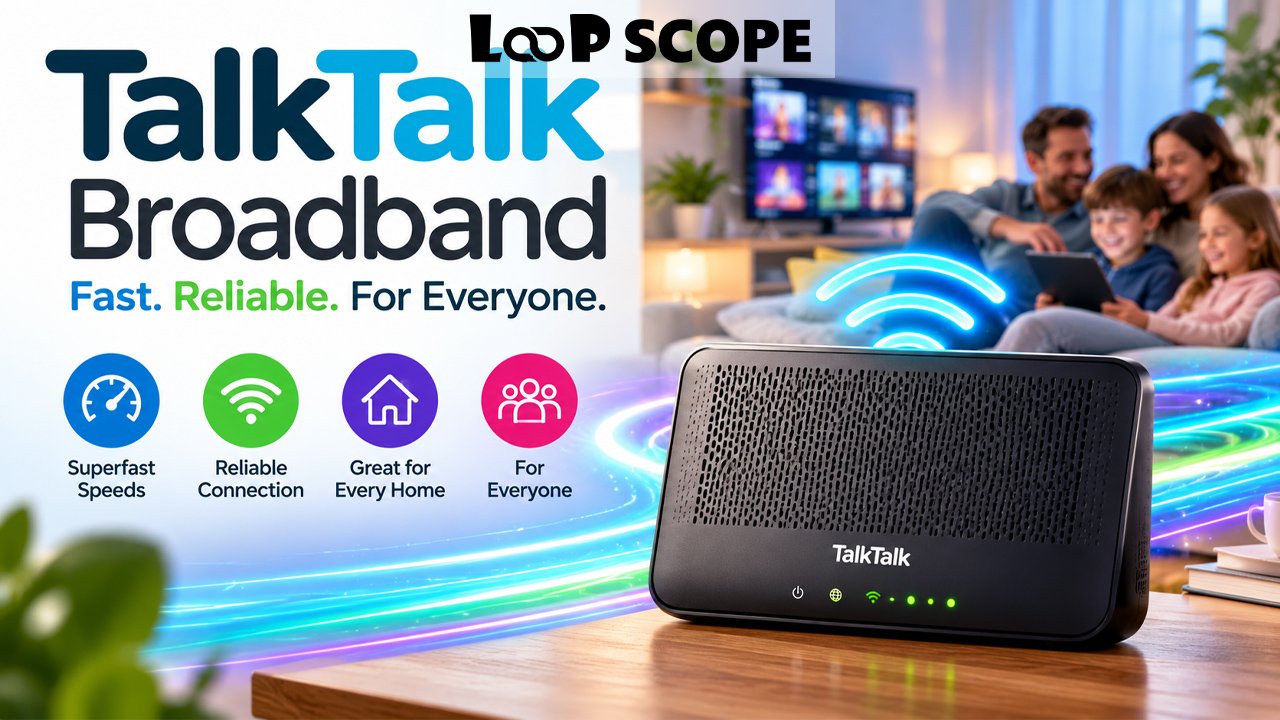
The part-fiber plans and Full Fibre 65 come with TalkTalk’s Wi-Fi Hub. Some of the faster full fiber plans delivered over CityFibre, a company that builds fiber networks in selected UK towns and cities, have been listed with an Amazon eero 6 Pro mesh router instead. TalkTalk also includes its HomeSafe security software and says its full fiber plans can connect up to 128 devices.
A fast line does not guarantee fast Wi-Fi. If you live in a large or multi-story home, a single router in the hallway can leave dead spots in the back bedroom or the garage. Mesh systems fix that by spreading several small units around the house, and they have become a normal part of home technology, so buying one separately is a realistic option if the included router struggles. For gaming consoles, desktop computers, and anything else that stays in one place, a wired Ethernet cable still beats Wi-Fi for stability.
5. Landline, Calls, and the Digital Phone Switch
The short answer: TalkTalk’s full fiber plans are broadband only, so any home phone service is an extra cost.
Independent listings show that the full fiber plans do not include a landline, and that a digital voice line and any call packages are priced separately. If you rarely use a home phone, that keeps your bill lower. If you do use one, add the cost of the voice line and your chosen call bundle to your monthly total before comparing providers.
There is a bigger change behind this. UK telecoms companies are moving home phones from the old copper-based network to internet-based digital voice, and TalkTalk describes its broadband-only full fiber plans as ready for that shift. The practical concern is equipment that depends on a traditional phone line, such as some alarms and telecare pendants. A digital voice line can also stop working during a power cut unless there is a battery backup or a mobile alternative. If anyone in your household relies on a telecare alarm, ask both the provider and the device maker before you switch.
6. Customer Service, Installation, and Reliability
The short answer: reviews of TalkTalk are mixed. The company is cheap and its tariffs are simple, but independent reviewers have not ranked its customer satisfaction near the top.
Expert Reviews’ 2026 assessment noted that TalkTalk did not finish near the top in any category of its annual broadband survey, and it suggested current customers look elsewhere when their contract ends. TalkTalk, for its part, highlights a silver award for Innovation in Customer Service at the 2026 CCA Excellence Awards and promotes its app as a quick route to help. Neither fact settles the question alone. An innovation award is not the same as a satisfaction ranking, so it is smart to check Ofcom’s published comparisons of complaints and customer satisfaction, which are updated regularly.
Installation is the other thing to plan for. Full fiber often needs an engineer appointment, and that can take longer if fiber has to be brought to your property for the first time. Part-fiber plans can often be set up more simply. Whichever you choose, do not cancel your current service until the new line is live and tested, and keep a record of speed tests and any fault reports you make. That paper trail matters if something goes wrong later.
7. How TalkTalk Broadband Compares with Other Providers
The short answer: TalkTalk competes mainly on price and simplicity, and some rivals beat it on cost, customer ratings, or top speed.
The same Expert Reviews piece found that Vodafone was cheaper than TalkTalk on all but one comparable tariff, and it pointed out that TalkTalk caps its connections at 900 Mbps even where CityFibre can deliver faster speeds that some competitors sell. On the positive side, the review credited TalkTalk with a larger full fiber footprint than providers that rely on Openreach alone, and it described the single set of tariffs as refreshingly simple.
The fairest way to compare is like for like: the same speed tier, the same contract length, and the total cost over the full term including price rises, router, and add-ons. Readers who want more plain-English explainers on everyday decisions like this can browse the Loop Scope guide section.
A quick three-question test helps:
- Can I get full fiber at my address, or only part-fiber?
- What is the total cost over the whole contract, rises included?
- Do I need the speed on offer, or am I paying for more than I will use?
Who Is TalkTalk Broadband Best For?
TalkTalk suits households that want a broadband-only full fiber plan at a modest price, are comfortable with scheduled price rises, and do not need the very fastest tiers or a bundled landline. It is a weaker match if customer service ratings are your top priority, if you need speeds beyond 900 Mbps, or if you rely on a landline for safety equipment.
Conclusion
TalkTalk broadband can be a sensible low-cost choice, especially if full fiber is available at your address and you want a simple broadband-only plan. The points that matter most are easy to remember: your postcode decides your options, advertised speeds are averages, prices rise on a schedule, the router shapes your real Wi-Fi experience, a landline is a separate cost, and customer service reviews are mixed.
Prices and terms change often, so confirm everything on TalkTalk’s order page for your own address. The best next step is simple: run the postcode check, work out the total cost across the full contract, and compare it with one or two rivals on the same terms. If the numbers hold up, TalkTalk broadband deserves a place on your shortlist.
Frequently Asked Questions
Is TalkTalk broadband any good?
It is good value for many households, especially on full fiber plans, but independent reviews of its customer service are mixed. Compare the total contract cost and check recent satisfaction data before you decide.
How much does TalkTalk broadband cost?
TalkTalk’s website currently advertises full fiber plans from about £24 a month, with scheduled rises in later years. Higher speed tiers cost more, so check the price for your address.
What speeds does TalkTalk broadband offer?
Average download speeds range from about 38 Mbps on Fibre 35 up to 900 Mbps on Full Fibre 900. Your real speed depends on your connection type and home Wi-Fi.
Does TalkTalk broadband include a landline?
No. Its full fiber plans are broadband only, and a digital voice line plus any call package costs extra.
How long is a TalkTalk broadband contract?
TalkTalk’s website shows 24-month contracts with no setup fee. Some third-party sites list different terms, so confirm on the order page.
Is TalkTalk full fiber available everywhere?
No. Availability depends on your address, and one comparison site estimated roughly 65% of UK premises could order full fiber in May 2026. A postcode check gives the definite answer.
Can I leave TalkTalk early without paying?
Usually not, but Ofcom’s Broadband Speeds Code may let you leave penalty-free if your speed stays below the guaranteed minimum and the problem is not fixed in time.