 Caleb Whitaker
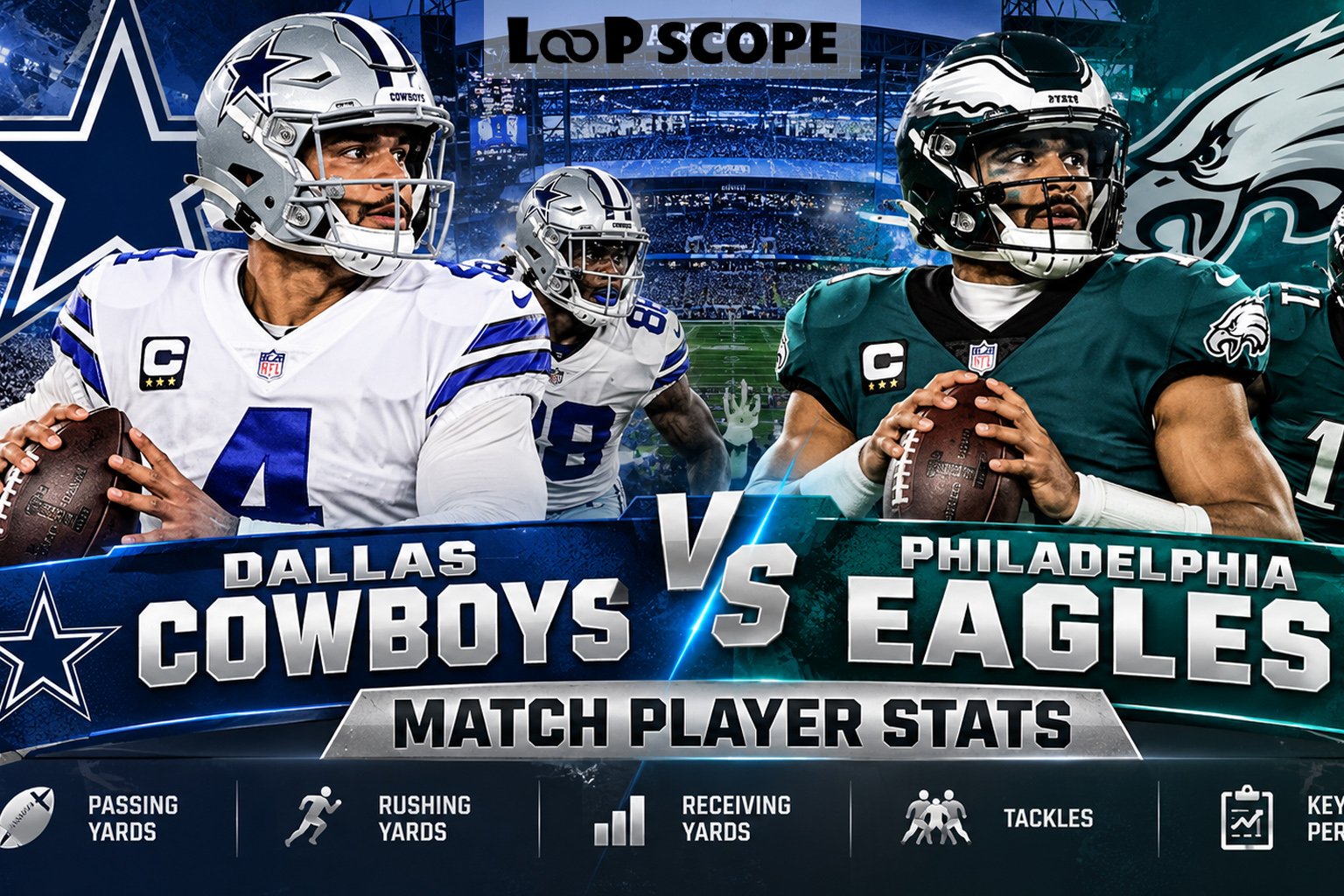
If you are searching for Dallas Cowboys vs Philadelphia Eagles match player stats, the game you most likely want is the Monday night meeting on October 26, 2026. Dallas beat Philadelphia 38-21 at Lincoln Financial Field. Javonte Williams ran for a career-high 155 yards, Dak Prescott threw three touchdown passes, and CeeDee Lamb caught two of them.
The teams meet again on Thanksgiving Day, November 26, in Dallas, so the numbers from this game are about to get a quick test. This guide breaks down the stat lines, explains why the Cowboys controlled the night, and shows how to read the box score before the rematch.
Quick Answer: Who Had the Best Stats in Cowboys vs Eagles?
Williams had the best all-around line, with 25 carries, 155 rushing yards, and a touchdown. Prescott completed 15 of 27 passes for 212 yards and three touchdowns without an interception. Lamb finished with five catches for 74 yards and two scores on 12 targets, and George Pickens added four catches for 57 yards and a touchdown. For Philadelphia, Tanner McKee completed 23 of 35 passes for 211 yards, one touchdown, and one interception, and Makai Lemon caught seven passes for 67 yards and a score.
Final Score and Team Stats
Dallas improved to 3-4 and Philadelphia fell to 2-5. The attendance at Lincoln Financial Field was 69,879. The team numbers explain the margin better than any single player line does.
| Stat | Cowboys | Eagles |
|---|---|---|
| Total yards | 416 | 321 |
| Passing yards | 212 | 200 |
| Rushing yards | 204 | 121 |
| Turnovers | 0 | 1 |
| Time of possession | 30:39 | 29:21 |
Dallas out-gained Philadelphia by 95 yards, and the entire advantage came on the ground. The Cowboys rushed for 204 yards to the Eagles’ 121, and they did not turn the ball over once. When one team runs the ball well and protects it, the passing game gets easier, and that is exactly how the night played out.
Player-by-Player Takeaways
Javonte Williams
Williams carried the ball 25 times for 155 yards, an average of 6.2 per carry, and scored a touchdown. It was the best rushing game of his career. The volume matters as much as the efficiency here, because 25 carries means Dallas stayed committed to the run for four quarters, which is only possible when the team is not playing from behind.
Dak Prescott and the Receivers
Prescott’s 15-of-27 line looks ordinary until you add three touchdowns, no interceptions, and a two-point conversion run. He averaged 7.9 yards per attempt, a healthy number, and he needed only 27 throws. Lamb was the main target at 12, and he turned them into 74 yards and two touchdowns. Pickens caught four of six targets for 57 yards and a score, and Ryan Flournoy added four catches for 70 yards. That is a balanced distribution, and it reflects a quarterback with time to find open receivers.
Tanner McKee and the Eagles’ Offense
McKee threw 35 passes and completed 23, so he was accurate, but 211 yards on that volume is only 6.0 yards per attempt. Lemon was his top option, with seven catches on eight targets. Dallas Goedert had five catches for 48 yards, and Hollywood Brown managed two catches for 30 yards. Dameon Pierce led the backfield with 14 carries for 47 yards and a touchdown. The offense moved the ball in short gains but never produced the explosive plays needed to keep pace.
Injuries That Shaped the Stat Lines
Philadelphia was thin. Saquon Barkley left early with a back injury after tweaking his hamstring, and DeVonta Smith was out with a hamstring injury. Dontayvion Wicks and several defenders were also unavailable. Several players returned from injured reserve before kickoff, including Landon Dickerson, but the roster was clearly stretched.
Jalen Hurts has been the larger storyline. Reports on October 19 said he is likely to miss the rest of the season, which is why McKee started at quarterback. When you read Eagles box scores this year, remember that the offense is working without its usual quarterback and without full health at running back and receiver. Check the official injury report before comparing any Philadelphia stat line to last season.
What the Box Score Teaches You
The Cowboys won with fewer pass attempts than the Eagles, 27 to 35, and with far more rushing attempts. That is the opposite of what many fans expect from a Prescott and Lamb offense, and it shows why you should read the shape of a game rather than only the headline totals.
Another lesson is about targets. Lamb saw 12 targets and caught five, a modest catch rate, yet he scored twice. A high-target, low-catch game can still be productive when the catches come in the end zone. By contrast, Lemon caught seven of eight targets for a more efficient but less dramatic line. Neither approach is better by itself, and the best way to judge a receiver is to look at yards per target and touchdowns together.
How the Teams Compare This Season
Dallas is 3-4 after beating the Eagles, which breaks a stretch of uneven results. The offense scored 38 points with a balanced attack, and the defense held Philadelphia to 21. The next test is a home game against Arizona on November 1, followed by a trip to Indianapolis.
Philadelphia is 2-5 and has struggled to score. The offense ranks near the bottom in yards and points per game, and the defense has been vulnerable to the run. The Eagles visit Washington on November 1, host the Giants on November 8, and then travel to Dallas for Thanksgiving.
Last Year’s Meeting: A Reference Point
The teams also met in the 2025 opener on September 4 in Philadelphia, when the Eagles won 24-20. Hurts completed 19 of 23 passes for 152 yards and ran for 62 yards and two touchdowns. Prescott threw for 188 yards, Williams scored two touchdowns, and Lamb had seven catches for 110 yards. The contrast with October 26 is striking: a quarterback who ran for two scores in that game is now unavailable, and the Cowboys’ running game, which scored twice in September, took over the whole night in October.
Box Score Column Guide for Football Fans
Football box scores use a handful of columns that tell most of the story. Completions and attempts show accuracy and volume, and yards per attempt is a better measure of a quarterback than total yards. Touchdowns and interceptions show scoring and ball security. Carries and yards per carry reveal the game script and how well the run game is working. Targets and catches show who the offense relies on, and sacks show pass rush impact. Turnover margin, the difference between takeaways and giveaways, is one of the strongest predictors of winning. In this game, it was Dallas by one, but the ground game made the real difference.
How to Pick the Real Top Performer
Start with efficiency, then role, then timing. A running back who gains 155 yards on 25 carries is changing the game even before you count touchdowns. A quarterback who throws three touchdowns without an interception helps more than one who throws for 300 yards with turnovers. And big plays in the second half matter more than early ones. A quarterback who protects the ball will usually win the box score battle.
In Cowboys vs Eagles, the best single measure was the rushing gap. Dallas ran for 83 more yards than Philadelphia, and that margin matches the 17-point final score closely.
Common Mistakes When Reading Cowboys vs Eagles Stats
The first mistake is assuming this game predicts the next one. The Eagles will likely have different players available on Thanksgiving, and the Cowboys will not necessarily run for 204 yards again. The second is ignoring quarterback context, because McKee’s numbers should not be compared directly with Hurts’ numbers from last season. Third, many fans overlook special teams and field position, which do not appear in a headline stat. Finally, different sites sometimes list small differences, so compare two official sources before you quote exact figures. The Pro Football Reference box scores list every game by date.
Why the Run Game Controlled the Night
The rushing numbers deserve a closer look because they explain the shape of the entire game. Dallas finished with 204 rushing yards on a night when Prescott attempted only 27 passes. That is a very different profile from a game in which a quarterback throws 40 times to keep pace. When a team runs that effectively, it controls the clock, keeps its defense rested, and makes play-action more dangerous. Time of possession was close, 30:39 for Dallas and 29:21 for Philadelphia, but the Cowboys’ possessions ended in points far more often.
It also helps to separate the back’s production from the offense’s design. Williams averaged 6.2 yards per carry, which means he regularly gained yards before contact or broke tackles after it. A back who averages that much on 25 carries puts defenders in a bind. If they load the box to stop him, Lamb and Pickens get single coverage. If they play back, Williams keeps gaining. Philadelphia rushed for only 121 yards, which gave Dallas’ defense far less to worry about.
What to Watch on Thanksgiving
The rematch on November 26 takes place in Dallas, so the Cowboys will have the home crowd. Watch three numbers early. First, check the Eagles’ rushing yards allowed, because a repeat of 204 would suggest the problem is structural. Second, check who starts at quarterback and running back for Philadelphia, since injuries have already changed the offense. Third, compare targets for Lamb and Pickens, which will show whether Dallas is leaning on the passing game or the ground attack.
Conclusion
Reading Dallas Cowboys vs Philadelphia Eagles match player stats well means looking at how the game was won. Dallas ran the ball for 204 yards, threw three touchdowns without a turnover, and let Williams, Prescott, and Lamb do the work. Philadelphia moved the ball in small chunks but lacked its usual quarterback and several key offensive players.
When the teams meet on Thanksgiving, check the rushing totals first, then the turnover margin, then the injury report. That order will tell you whether the October result was a one-night story or the start of a trend.
Frequently Asked Questions
Who won the Cowboys vs Eagles game on October 26, 2026?
Dallas won 38-21 at Lincoln Financial Field in Philadelphia on Monday night.
Who had the most rushing yards?
Javonte Williams ran for 155 yards on 25 carries and scored a touchdown, a career high.
How did Dak Prescott play?
Prescott completed 15 of 27 passes for 212 yards and three touchdowns with no interceptions.
Who started at quarterback for the Eagles?
Tanner McKee started and completed 23 of 35 passes for 211 yards, one touchdown, and one interception.
When do the Cowboys play the Eagles again?
The teams meet on Thursday, November 26, in Dallas. Confirm the time on the official NFL schedule.
What are the Cowboys’ and Eagles’ records?
Dallas is 3-4 and Philadelphia is 2-5 after the October 26 game.
Where can I find official Cowboys vs Eagles player stats?
The NFL website and team pages publish official box scores. Pro Football Reference lists full player lines.